








Noria
Home Training Publications Conferences Services Book Store Resources

bookstore home | ebooks | en Español

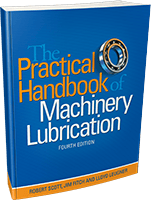
The Practical Handbook of Machinery Lubrication
L. Leugner


Price: $70.00

Format: Paperback
Publisher: Maintenance Technology Internation
Publish Date: 2005
Pages: 253

Review | Book Excerpts | Table of Contents


Bonus Package Included

with this item.

Become the lubrication expert in your company.
There's a good reason The Practical Handbook for Machinery Lubrication is our all-time best-selling book. It's packed with useful, actionable information that you'll put to use right away. It answers the tough questions and is written so that anyone can understand it. Once you start reading this book, you probably won't stop until you finish it. It is that easy to read.

You'll find understandable explanations of how lubricants work, what they're made of and how they break-down. You'll learn best practices for oil change intervals, filtration selection. lubricant selection and more.

Ever wondered about after market additives and supplemental oil conditioners?
Perhaps your co-workers and friends have tried to convince you to put them in problem equipment or even your vehicle.

There are hundreds of chemical additives and supplemental lubricant conditioners available today. Some people think that the claims made by these companies are unbelievable, but in certain specialized applications or industries, these additives could have a definite place in the improvement of lubrication.

In The Practical Handbook of Machinery Lubrication you'll learn four hard-fast rules to go by when determining if an after-market additive is right for your application. Whether you are a believer or a skeptic, if you follow these four rules, you can make the right decision. Making the right choice saves your company money and establishes you as the lubrication go-to person.

You will also find a checklist of fourteen items you should consider for any lubricated or hydraulic system.

Trying to get longer life out of lubricants or thinking about extending oil drain intervals?
Be careful. You could save you're company big money, OR you could end up the scapegoat if problems arise. But, if you know the conditions which cause oils to degrade and fail, you can avoid the embarrassment and give a clear reason why you will or won't extend oil drains.

Plus, you'll learn the five destructive conditions that could destroy your oil - even if you are using a "super lubricant".

Review

No Review Available

Excerpt

Excerpt 1

Synthetic Oil Case Study
A Canadian company engaged in the operation of several compressors experienced a problem where high temperatures caused the compressor oil to oxidize. The oxidized oil formed carbon deposits in the discharge pipes, which in turn created several discharge pipe hot spots. Conditions became such that a severe explosion occurred and a catastrophic failure resulted. Compressor oil oxidation problems have been eliminated through the use of a diester-type synthetic compressor lubricant designed to resist high temperatures and deposit formation.

Excerpt 2

Absolute Filter Ratings
An absolute rating indicates the size above which no particle of any size will pass. It does not specify the size of the smallest opening in the media, so that a filter rated at 10 micrometers absolute will do little to reduce silt particles measuring less than 10 micrometers. Also, these filters will be ineffective every time the bypass valve opens (regardless of their absolute rating) whenever they are used in full-flow applications.

Excerpt 3

Rules for Dealing With Aftermarket Additives and Supplemental Oil Conditioners - RULE #3
Increasing the percentage of a certain additive may improve one property of an oil while at the same time degrade another. Example (a) Some additives compete with each other for the same space on a wear surface. If a high concentration of a special antiwear agent is suddenly added to the oil, the corrosion inhibitor may become ineffective. The result may only be an increase in corrosion-related problems.


Table of Contents

Oil Filters, Filtration and Oil Re-Conditioning
Filter Types
Surface type elements
Depth type elements
Filtration systems
Full flow system
By-pass filtration systems
Combination full flow and parallel circuit systems
Micron rating of filters
Nominal Rating of filters
Absolute filter ratings
Factors that affect filtration
Pressure drop
Cold oil and high viscosity startups
Changes in flow rates
Pump pulsations and mechanical vibrations
High combustion soot
Filtration system effectiveness; A check list

The Importance of Oil Changes
Self-generation of contamination in the oil
Oxidation degradation of the oil
Water contamination
Additive depletion
Incorrect of poor quality fuels

After Market Additives and Oil Conditioners

Centralized Lubrication Systems: Types, Advantages and Disadvantages
Basic System Components
Two Basic Types of Indirect Systems
Parallel
Series
System Variations
Dual Line, parallel
Single Line, parallel
Reversing flow, single line, series
Single point, cartridge, direct system
Air Activated Centralized Oil Lubrication Systems
Oil Mist
Mist nozzles
Spray nozzles
Condensing nozzles
Advantages of Oil Mist Systems
Disadvantages of Oil Mist Systems
Air Oil
Advantages of Air-Oil Systems
Disadvantages of Air-Oil Systems

Operating Temperatures and Lubricant Selection
Boundary lubrication conditions
Hydrodynamic lubrication conditions
Elastohydrodynamic lubrication conditions
Physical characteristics
Viscosity
Pour point
Viscosity index (VI)
Base oil type
Chemical characteristics
Anti-wear additives
Extreme pressure additives
Viscosity index improvers
Temperature limits for Use of Seals and 0-Ring materials

Oil Seal Selection, Maintenance and Fluid Compatibility
The Sealing Concept
Types of Seals
Static Seal
Dynamic seals
Rotary Seals
Oil Seal Selection Factors
A Guide to Proper Seal Selection
Causes of Seal Failure

Bearings and Their Lubrication

Lubricant Analysis, Testing Techniques and Case Histories

Types of Lubrication
Boundary Lubrication
Hydrodynamic Lubrication
Elastohydrodynamic Lubrication

SAE Oil Viscosity Classifications
Multi-Viscosity or Multi-Grade Oil
SAE Crankcase Oil Viscosity Classification System

API Quality Service Classifications
The API Engine Service Classifications
"S"-Service Classifications for Gasoline Engines
"C"-Commercial Classifications for Diesel Engines
Combined API Service Classifications
Oil Consumption
Fuel Economy

Engine Oils and Additives
Detergents/Dispersants
Anti-Wear Agents
Anti-Oxidants
Viscosity Index Improvers
Rust Inhibitors
Anti-Foaming Agents
Friction Modifiers
Pour Point Depressants
Corrosion Inhibitors
Natural Gas Engine Lubrication
Valve recession
Ash deposits
Nitration
Air/Fuel Ratios
Timely Oil Drains Provide a Long-Term Solution
Rail Road and Marine Engines

Automatic Transmission and Tractor Fluids

Hydraulic Mineral Oils and Additives
Viscosity
Additives
Compatibility of Hydraulic Oils

Industrial Oils and Additives
Physical Characteristics
Viscosity
Viscosity Index
Pour Point
Flash Point
Neutralization Number

Chemical Characteristics and Additives
Detergents
Dispersants
Rust/Corrosion Inhibitors
Oxidation Inhibitors
Anti-Foaming Agents
Viscosity index Improvers
Pour Point Depressants
Demulsifiers
Anti-Wear Additives
Extreme Pressure

Quality Indicators and Laboratory Tests
Oxidaiton Stability
Foam Test
Copper Corrosion
Demulsibility
Wear Test
EP Test

Biodegradable Hydraulic Fluids, Application and Maintenance
What are Biodegradable Hydraulic Fluids?
Why use Biodegradable Hydraulic Lubricants?
Cleaning and Flushing Techniques for Conversion
Monitoring the Condition of Biodegradable Fluids in Service
General Maintenance Practices for Hydraulic Systems

Automotive Gear Oils, ISO Viscosity Classifications and Additives
EP Oils
Non EP Oils
Compounded Gear Oils
Some Limitations of Existing EP Oil Technology
Gear Types

Fire Resistant Fluids, Types, Application and Maintenance Considerations
Oil-in-water Emulsions (ISO HFA)
Water-in-Oil Emulsions (ISO HFB)
Water-Glycol Fluids (ISO HFX)
Synthetic Fire Resistant Fluids (ISO HFD)
Considerations When Converting to Fire Resistant Fluids
Precautions for the Prevention of Hydraulic System Fires

Machine Tool Lubricants and Metal Working Oils
Machine Tool Operations
Broaching
Cold Heading
Drilling
Extruding
Grinding
Honing
Punching
Roll Forming
Stamping
Tapping
Threading
Turning
Lubricant Types
Straight Oils
Soluble Oils
Semi-Synthetics
Synthetics
Way Lubrication
Metal Working Lubricant Additives

Base Oil Refining and Re-Refining of Used Oils
Atmospheric Distillation
Refining
Sulfuric Acid/clay refining
Solvent Extraction
Catalytic Hydrogenation or hydrotreating
De-asphalting
De-waxing
Blending

Synthetic Lubricants, Mineral/Synthetic Oil Comparisons
Alkylated Aromatics
Polyalphaolefins
Dibasic Acid Esters
Neopentyl Poly Esters
Polyghlycols
Phosphate Esters
Silicones
Silicate Esters
Fluorocarbons
Polyphenyl Ethers

Solid Lubricants, Unique Solutions for Unique Problems
Selection of Lubricant
Application of Solid Lubricants
Binder Selection
Methods of Application

Grease, an Introduction
Grease Grade Selection and Application Guidelines
Rolling element bearings
Journal Bearing
Relubrication Intervals
Relubrication Amounts
Temperature Considerations
Contamination and Water

Turbines and Turbine Oils
Gas Turbines
Steam Turbines
Turbine Lubrication Systems
Viscosity
Film Strength
Resistance to Oxidation
Protection Against Rusting
Water-Separating Ability
Resistance to Foaming
Independent Purification
Batch Purification

Placing "Annual Tenders" is a Costly and Outdated Practice

Types of Wear and Their Causes

Lubricant Storage, Safety and Environmental Considerations

An Introduction to Analytical Trouble Shooting

So You want to Become a Certified Lubrication Specialist

References

Glossary of terms/Index

List of Illustrations/Figures/Tables

Add to Cart | View Cart | Checkout


Free Bonus Package
with this item.


Order Online or Call:
1-800-597-5460


Best Sellers


Resources By Category
Synthetic Oil
Selecting Oil Analysis Instruments
How to Read Oil Analysis Reports
Extending Oil Drain Intervals
Filtration and Contamination Control
Selecting Lubricants
Lubricant Storage and Handling
Oil Sampling
Lean Manufacturing

It's In Stock!
Don't wait 4-6 weeks at other online bookstores. Most books in our store ship within 48 hours.

Lube-Tips Newsletter
Subscribe to our free Newsletter

Free Subscription!
Start your free subscription to Machinery Lubrication magazine today.